Categories
GAME AUDIO

GAME AUDIO SHOWREEL

Sound Designed and composed in FL Studio.

To create a standout game audio reel with different settings and gameplay, I handpicked specific games for a well-rounded showcase.
Each game offers different sound design aspects and scenarios, highlighting my adaptability and versatility as a game audio designer.
Rather than following a linear sound production approach, I aimed for interactive audio, akin to in-game sound design. I deconstructed every action within the games, focusing on individual sound effects and how they are placed in their retrospective worlds.
This approach injected fresh, interactive audio, enhancing player immersion.
For the SFXs and ambiance layers, I blended my own recordings with various synths and Soundly’s massive sample library. This combination allowed me to craft unique and distinctive sound effects for each scenario. Musical elements were composed from scratch.

HITMAN 3
This segment was dedicated to spotlighting the intricacies of sound design in stealth scenarios, where attention to small details is key.

To achieve realistic and detailed footstep sounds, I employed a layered approach. This consisted of three distinct layers: shoes, cloth foley, and ground surface. This approach allowed me to capture the nuances of each step, adding depth to the overall soundscape.

Gunshots are crucial in this game. To ensure variety and authenticity, I designed each gunshot sound separately, creating multiple variations, varying depending on factors such as location and shot placement. Each gunshot is a composite of multiple sound elements, including whooshes, modulated 808s (adjusted for headshots), kicks, camera flashes, pots and pans clanging, and the sound of bullet shells hitting the ground. It was crucial to make sure that players could distinctly hear the sound of bullet shells hitting the ground after each shot. This added an extra layer of authenticity to the overall audio experience, enhancing player immersion.
The first gunshot was tailored to emphasize the echo created when the shot hit the metal surfaces in the environment. Achieving this effect involved using convolution reverb VST, specifically Fog Convolver. I incorporated the sonic character of a metal shelf into the gunshot’s trail end to simulate the desired impact.
In the second gunshot, I placed more emphasis on creating a sense of impact since the player does a headshot. To achieve this, I introduced a pitch-modulated 808 sound as an additional element. This extra touch enhanced the player’s perception of a powerful and precise shot.
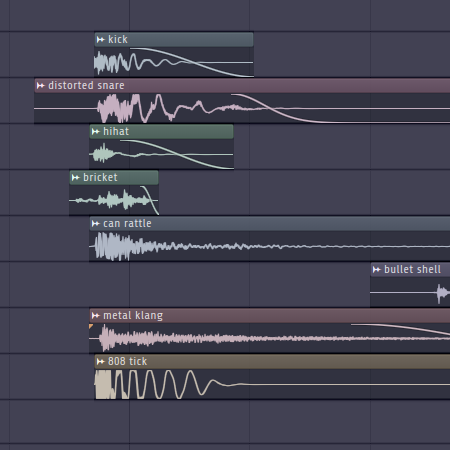

Gun Shot 1
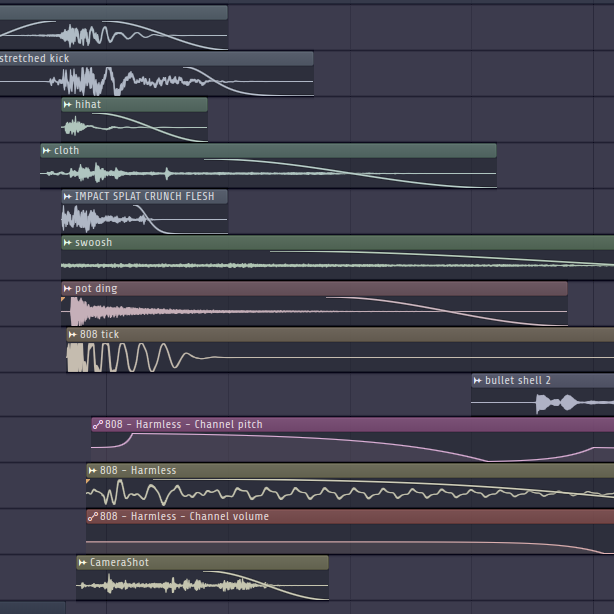
Gun Shot 2

I’ve implemented dynamic ambiance layers that synchronize with Agent 47’s on-screen movements. To achieve this, I employed automation capture techniques to adjust the panning of each sound, all while closely tracking the in-game visuals. This approach guarantees that background voices and room tones seamlessly align with the player’s perspective, enhancing the overall immersion. I kept the music minimal for this sequence, placing the emphasis on the natural world elements of Agent 47’s actions and stealthy movements. As a result, you’ll only notice a brief string kick at certain moments, with minimal additional musical elements.

ASSASSIN’S CREED ODYSSEY
This sequence is a sonic playground, allowing me to handle numerous events in a chaotic environment. The scene brims with complexity: water creates a backdrop of noise, boats collide and creak with their thin wooden planks, explosions, and battles add chaos, screams pierce through, and footsteps echo. It’s not just the player’s footsteps; other characters on the ship contribute to this intricate soundscape. I chose this scene because it’s a demonstration of my ability to craft sound in a setting with overlapping sounds and simultaneous actions.

To sync everything with in-game movements, I meticulously timed footsteps and movements for both the player and nearby characters. This made it feel like you could hear and see their actions around the boat. I used footsteps from a prior project, recording the sound of leather shoes on thin planks. I also added creaking noises, synchronizing them with movements. For instance, when the player takes a heavy step and leaps for an attack, I match it with a creak, enhancing authenticity.
Recording moaning and screaming sounds was another significant step. In intense combat scenarios with extensive arm movements, these sounds are natural. I even altered Kassandra’s voice, originally female, to sound male for my redesign. I sourced various sounds from Soundly, selecting and editing screams, background yelling, and battle cries to create the atmosphere.

The most crucial step was making the combat satisfying. I carefully processed various metallic sounds to create a diverse range of sword hits, ensuring dynamic interactions between the player and the warriors on the boat. Impacts adapted to different scenarios, like striking a shield or armor, to maintain uniqueness.
I added swooshes, hisses, and small kicks to enhance the sword’s movement. Striking flesh introduced squelchy, meaty sounds, intensifying the experience. The player’s injury triggered a distinctive ringing sound. In the final combo, a sub-impact sound conveyed power and uniqueness, setting it apart from standard metal sounds. This approach ensured both visual and acoustic immersion.

The combat music, though simple, consists of pulsating drum beats reinforcing the battle’s intensity. It complements the action, emphasizing the fight’s rhythm with basic drum patterns and a low-pass filter, primarily focusing on midrange frequencies, providing that extra punch.
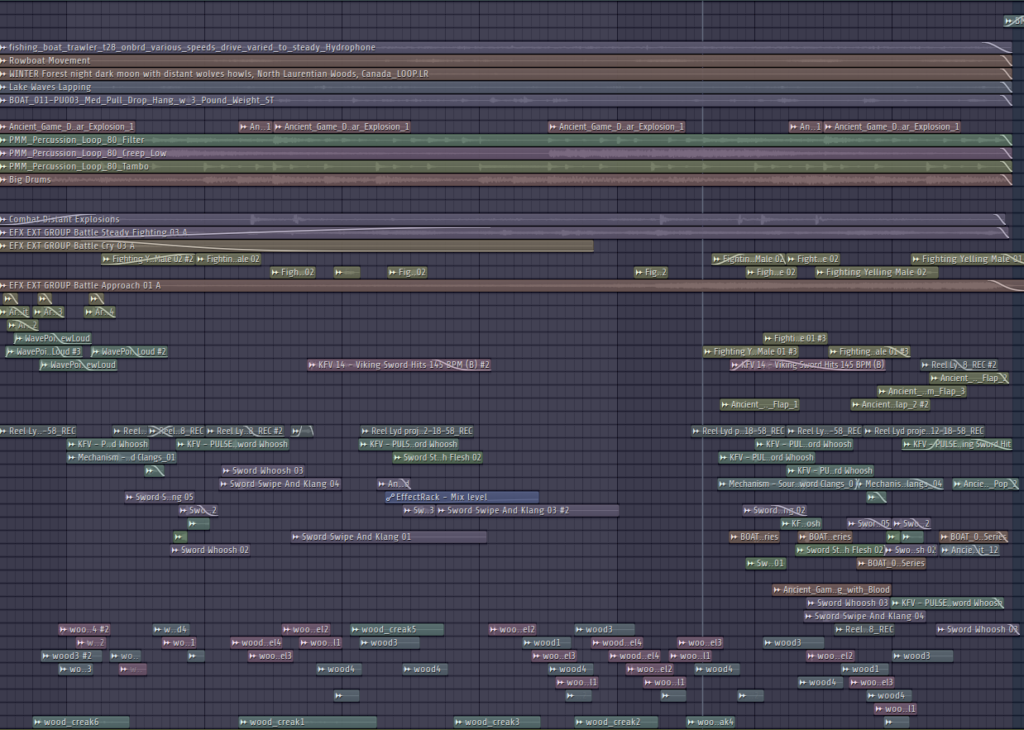
The whole Assassin’s Creed Odyssey sequence

DEEP ROCK GALACTIC
With Deep Rock Galactic, I aimed to give a sci-fi underground world a makeover, focusing on interactivity. To create an authentic underground feel, I reduced the high-end frequencies to make space for impactful roars and vocal drops during gameplay.
My first task was enhancing the footstep sounds. I wanted players to sense their presence while walking, which adds to the immersion. I achieved this by modifying a metal can sound with a low-pass filter and blending it with recorded sand footstep sounds. This fusion resulted in a cave-like crunch, making the experience more engaging.


In the original game, there weren’t many interactive sounds when placing items in the cart, which felt like a missed opportunity. I wanted players to receive feedback when they added items to the cart, creating a more immersive experience. To achieve this, I incorporated a variety of small, plucky sounds using Serum and Pigments.
I then applied a low-pass filter and Valhalla Room reverb to enhance the overall atmosphere.
This reverb effect was a consistent choice throughout this game sequence, contributing to the underground ambiance.

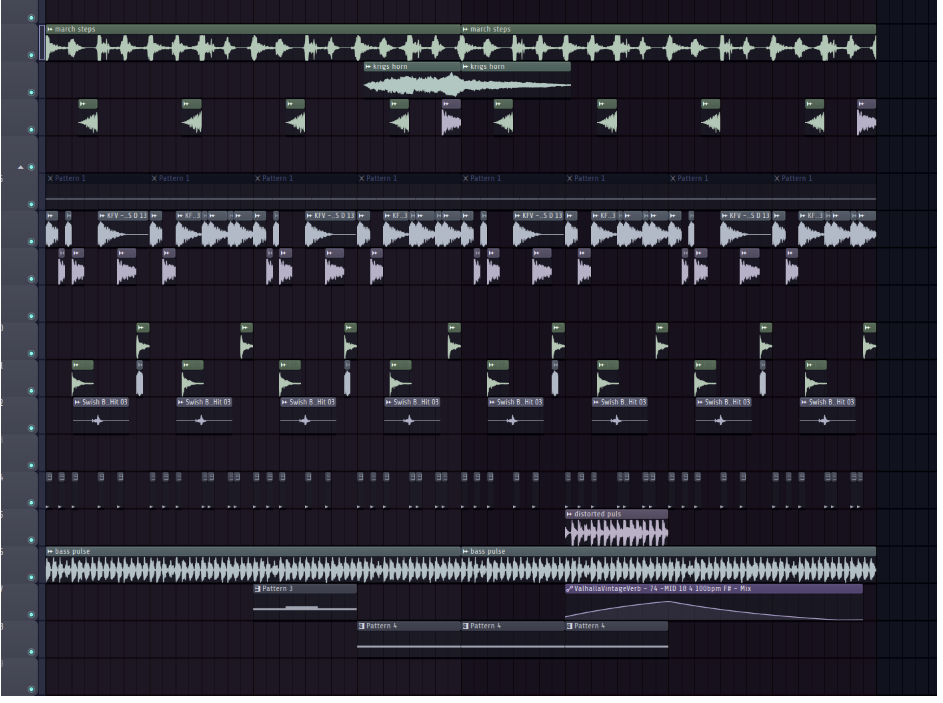
I enhanced the game’s cannon/gun sound to make it more impactful. While the original sound in the game was cool, it lacked punch. To achieve this, I layered various elements, including my own drums, custom impact sounds, and modified laser effects. In FL Studio, I applied an interesting technique by ‘boosting’ and clipping the sound to create an over-compressed snare drum sample, resulting in a distorted yet effective outcome. This approach added rich harmonics and boosted the desired low/mid frequencies. Additionally, I incorporated a Hardstyle kick, processing it with Izotope Trash, Camel Phat, and a high-pass filter to enhance the mid frequencies.
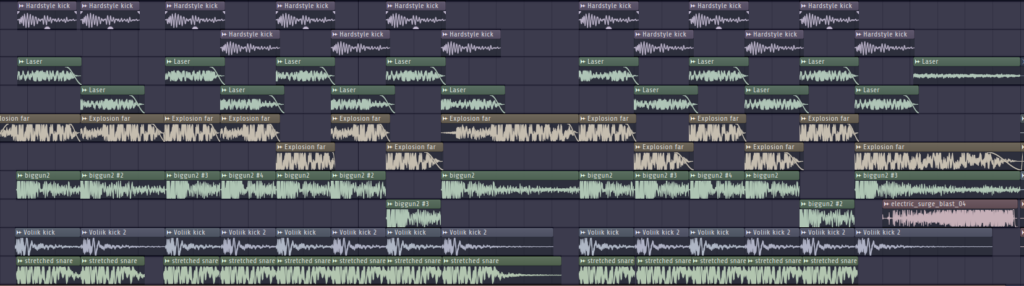
All the layers from the gun/cannon
With the sequence’s atmospheric layers, my goal was to create the sensation of a bustling cave with various activities and the presence of crawling monsters. This involved incorporating creaking, noise, and distant bangs, all coming from behind the stone walls. There’s a continuous rumble of stone movements and numerous stone impacts to reinforce the sense of massive surroundings. These elements contribute to the game’s atmosphere, and they are the primary layers that define it.
The only noticeable musical element is the pressing sound when the Glyphid crawls over a rock. It’s akin to a distorted violin, but it’s actually created using dry ice on a rock, generating a scraping effect. I processed it in a unique way through plugins like Little Alter Boy and my personal favorite, Dumpster Fire, to pitch it and achieve a completely distorted violin-like sound. This adds a dark musical effect, suiting the intensity of the fight sequence triggered when the Glyphid appears.


IT TAKES TWO
Transitioning to a whimsical and magical soundscape, I showcased my ability to craft audio for games set in charming and fantastical settings. This couch co-op game offered a unique opportunity to work on audio elements that enhance the gaming experience, especially in sections resembling over-the-top Roguelike sequences.

To match the dungeon’s acoustics, I established a Reverb Bus, routing all SFXs, footsteps, and voices/breaths through it. I also applied automation for panning and volume adjustments to synchronize with the characters’ movements and magical spells on the screen.

When crafting magical sounds for player spells, I aimed for an intentional cliché and exaggerated effect. To avoid sounding overly boxy, I utilized glitch delays and pitch modulations, including the Hysteresis plugin, and my favorite, Dumpster Fire. These sounds were channeled through the reverb bus I created, ensuring seamless integration into the game’s universe, and imparting a massive and dynamic feel. For Cody’s grand magic spell, I pursued a unique and dynamic soundscape. Unlike simpler magic bursts, this spell required sustained elements. I recorded myself screaming into the microphone and processed it using FL Studio’s Granulizer plugin, with looping, panning, depth, speed adjustments, and added randomness.

This creative process yielded an intriguing magical spell effect and can be a versatile tool for sound design, as seen in the video below.

All character sounds, including “hep hep,” spellcasting, May and Cody hitting the wooden door, and Cody’s “YEAHH” when he teleports through the metal grid, are my own voice. This choice aligned with the animated, cartoonish, and childlike atmosphere of the game. These exaggerated character sounds were blended seamlessly with the room’s acoustics via the same reverb bus.

Considering the visuals, I aimed for dreamy and fantastical music. Layering Omnisphere textures with an ’80s synth via the FL plugin FLEX, I created a magical chord. Convolution reverb and detuning enhanced its dreamy, angelic quality. I deliberately mixed this pad loudly to accentuate the dreamy atmosphere in this game section. Despite the music’s prominence, ample space remained for sound effects and vocals to immerse players in the environment.


STARFIELD
I selected this Starfield gameplay segment because it featured both sci-fi UI and screen sounds at the beginning and later introduced heavy machinery and spaceship-related audio, providing a fresh challenge compared to my previous work.


For the UI sounds, I used organic recordings of small metal objects dropped onto stone slabs. These recordings had interesting resonance, which I enhanced and processed using effects like ring modulation, frequency shifters, and pitch modulators. I also applied glitchy delay effects, including Hysteresis, FL Studio’s built-in frequency shifter, and Dumpster Fire. These effects created a unique sci-fi UI atmosphere, immersing players in the spaceship launch sequence.

When redesigning the spaceship’s startup and take-off effects, I aimed to synchronize them with on-screen actions and button presses. My goal was to convey a sense of dynamic activity both inside and outside the spaceship. To achieve this, I used a rumbling sub-bass that gradually pitched upward as the engine powered up, enhancing the feeling of the ship’s energy building.
For the external perspective, I highlighted the fiery explosion as the engines ignited. I incorporated stretched recordings of fuel fires and added various mechanical sounds to simulate the ship’s preparation for liftoff. This involved the metallic rumbling sound that accompanies the ascent and the animation of the spaceship’s legs folding up. To create these sounds, I resampled and stretched a squelchy reece bass I had initially made in Sytrus. I applied LFO modulation and pitch modulation to achieve the desired effects.

Categories
GAME AUDIO

DUSTFALL

Created in Unity, sound designed in FL Studio, and implemented with FMOD.

DustFall, my creation for the Sonic College Game Audio exam, is an FPS set in a post-apocalyptic world inspired by titles like Fallout. Players take on the role of a courier delivering energy cells in a desolate desert.
My primary goal was to craft an immersive, foreboding landscape with sandstorms and a menacing tornado. Details such as abandoned cars, bunkers, dusty billboards, and a crashed plane added depth to the world.

SFX

I focused on creating an initial sense of disorientation for players by enveloping them in a confusing atmosphere with only a waypoint marker as their guide. Sound played a crucial role in achieving this disorientation. The intensity and sound levels dynamically change as players navigate through different areas. For instance, near the tornado and inside the sandstorm, the wind and debris drowned out most sounds, intensifying the disorientation. As you move away from the tornado and sandstorm, a gradual low-pass filter inside FMOD is triggered, simulating an increased distance, and adding a touch of realism to the ambiance.

Audio logs in the game served to deepen the narrative, similar to Bioshock games. To give them a dated feel, I EQ’d the recordings of my voice, emphasizing mid-frequencies for a thin sound. I also applied distortion, voice manipulation using Little AlterBoy, and pitch warping via the iZotope Vinyl plugin to achieve an old-school record player effect.

I made numerous subtle sound adjustments to enhance gameplay depth and immersion. For example, approaching water triggers the sound of rushing water. Being caught in a sandstorm makes your character cough. Additionally, your footsteps change based on the surface you’re on, whether it’s sand, metal, or wood. To achieve this, I placed specific trigger zones in the game world and wrote code to switch the footsteps in FMOD when the player collided with these areas.

I wanted the player to truly feel the power of the gun when firing it. To accomplish this, I applied a compressor to the ambiance and music channels, causing them to sidechain to the gun channel when the gun was fired. Lastly, I added an echo trail to enhance the vast, open feeling of the desert.


MUSIC

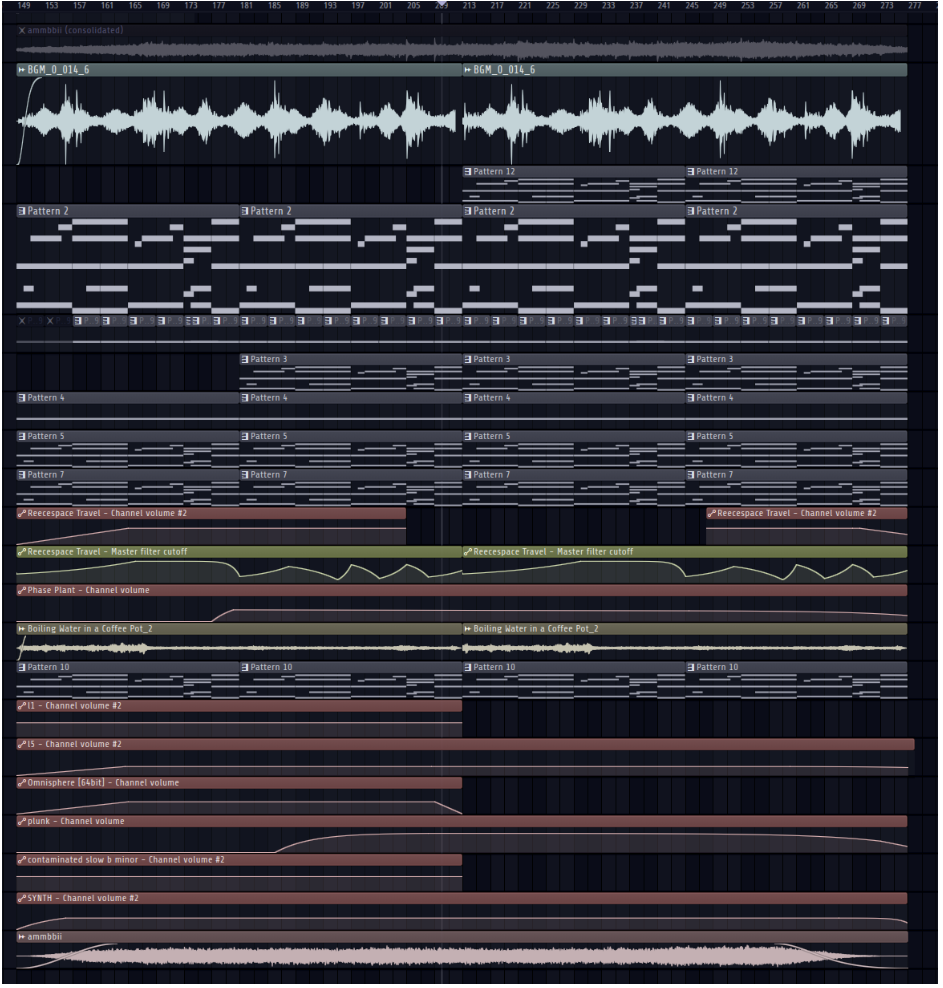
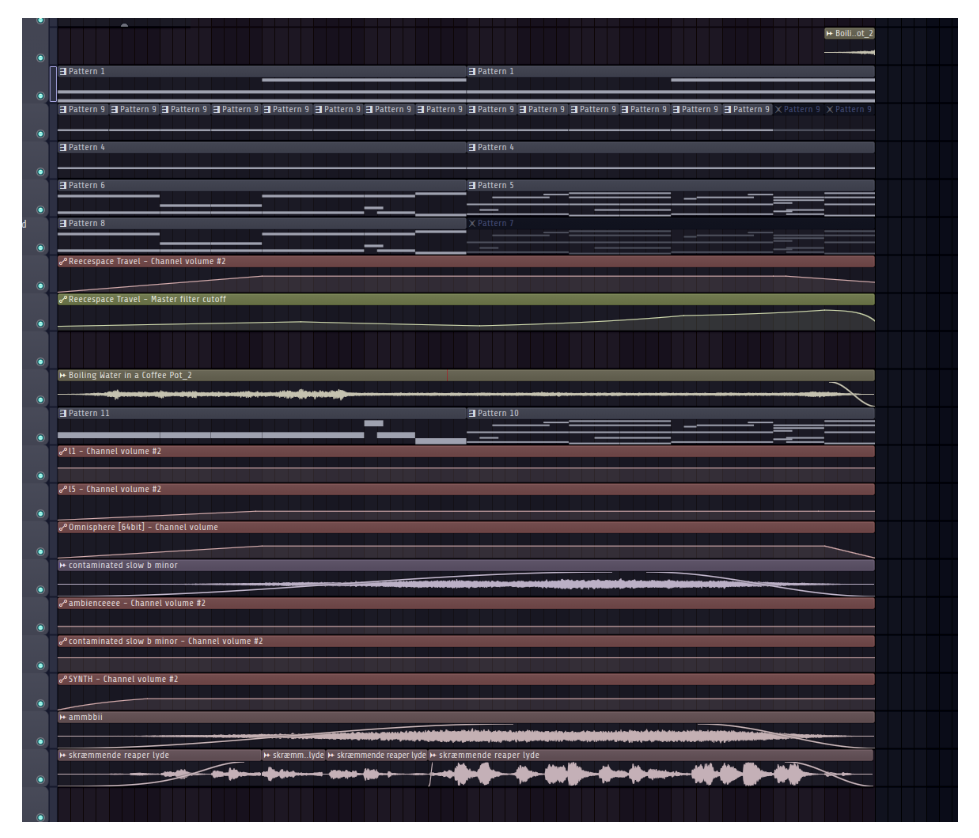
I used music and ambiance to shape the game’s atmosphere, making it eerie and enticing for exploration. I achieved this by layering various field recordings, including sounds of rocks and wind, which I then granulated inside Omnisphere. Additionally, I incorporated a stretched-out recording of boiling water from a coffee pot to introduce a unique grainy texture, perfect for conveying the desolation of a dusty desert.

To complement the eerie ambiance, I composed a simple yet evocative chord progression. This musical foundation not only added depth but also served as a consistent thread throughout the game’s different areas. I wanted players to feel the unity of the game’s universe, so I reused this chord progression both in the desert and the town.
Inside the town, I expanded upon the chord progression, introducing more musical layers, including piano and strings. This amplified the overall atmosphere, making it even more immersive. The continuity of the chord progression ensured seamless transitions between different musical layers as players ventured through the game.
As players moved between areas, the soundscape evolved. The desert atmosphere was characterized by the persistent wind, while the atmospheric music took a backseat. However, as players approached the town, the wind subsided, and the music became more pronounced. This shift enhanced the melancholic mood, drawing players deeper into the game’s world.


Atmospheric and Musical layers inside the Town

Atmospheric and Musical layers in the desert


In moments of intense combat against zombies, the game seamlessly transitioned into combat music to elevate players’ adrenaline levels. The combat music was carefully designed to immerse players in the action. It featured a combination of manipulated deep and wet drums, simulating a heart pumping feel, enriched with convolution effects to create a tense atmosphere.

To ensure a seamless experience, I employed stingers to mark the beginning and end of the combat state. These stingers facilitated smooth transitions, allowing players to fully engage in the action without disruptions.
Maintaining the intensity of the combat music was crucial. To achieve this, I used compression triggers within FMOD’s mixer. These triggers ensured that the combat music remained prominent and powerful whenever the player was engaged in combat, intensifying the overall gaming experience.

Combat MusiC

Categories
GAME AUDIO

APE JOURNEY

Created in Unity, Sound Designed in FL Studio, and implemented with Wwise in 7.1.4.

For our Sonic College 3D game audio exam in 2023, we tackled all aspects of sound creation for a short game in a team of three.
We were given the game
‘Ape’s Journey’, created by Simon Kærslund. We integrated Wwise into Unity, crafting ambiance, sound effects, and music using C# and Wwise. Object-based audio was our go-to, immersing players in a 7.1.4 surround sound environment within a certified Dolby Atmos studio. Before we got started on crafting all the sounds, we spent a few hours, upgrading the visuals of the game and adding some post-processing, to make it look more immersive and gloomy.

SFX
My partner and I focused on SFX, where we explored diverse sound design tricks. We ventured into a Foley studio to capture gravel and cave footsteps, cloth and paper scroll sounds, and blended synthesis and recordings to create a mixture of organic and digital audio, to make it feel magical. Inspired by Skyrim’s mix of realism and fantasy, we harmonized our creations to match the game’s atmosphere. From footsteps on various surfaces to the monstrous roars of dragons, our SFX aimed for a rich, immersive experience. Fun Fact; except for its wings and fireball, all the Dragon sounds were created with my mouth. This included bite sounds and death screams. I got up close to the microphone, which resulted in some messy drool and spittle on my table. After recording, I tweaked them to sound even more monstrous by adjusting formants and pitch.

Creating object-based audio through Wwise, we placed 3D sounds in Unity, enhancing immersion. However, some SFX, like NPC voices and menu sounds, used channel-based audio for a 2D effect.


MUSIC
My partner and I drew inspiration from games like Nier Automata and Skyrim, aiming for a blend of epic orchestral music and ethereal atmosphere to evoke melancholy. Our music featured a mix of acoustic instruments, recorded elements, and synthesized strings and pads. To ensure cohesion and smooth transitions, we composed all the music in G#. This choice allowed for versatility, creating both calm and imaginative compositions in G major and more unsettling moods in G minor. We crafted multiple music layers for a 7.1.4 system, utilizing Wwise for 3D spatialization. This accommodated room for ambiances and SFXs.

In our collaborative process, we each contributed to different musical aspects. My partner initiated the house music, which I enhanced by slowing down the melody and adding effects like delay, reverb, chorus, and synth layers.
I took charge of the combat music, constructing layers of strings, epic drums, and eerie drones. Jonas later fine-tuned it by adjusting layers and introducing violin tracks. These music elements were linked to the player’s HP through an RTPC in Wwise. The script dynamically adjusted music layers based on the player’s health, intensifying at 70 HP. This created the illusion of a new track starting. I also created stingers for smooth transitions in and out of combat.
I crafted the Cave music, combining eerie chorus, mysterious synths, and drones with Jonas’s strings. These layers intensified as players approached the magic stones and faded when entering the lava room, managed by an RTPC that measured the distance from the stones.
The forest remained music-free, fostering anticipation for soothing garden and “inside the house” music while inducing unease in the swamp, where I also handled the music. To transition between zones, we used Music States in Wwise, triggered by Unity’s AkState script.

Our group collaboration was excellent, with efficient task delegation and a cohesive atmosphere throughout. Had we had more time, I would’ve been able to work more in Wwise and learn it properly, but I will get better at it eventually.