Created in Unity, sound designed in FL Studio, and implemented with FMOD.
DustFall, my creation for the Sonic College Game Audio exam, is an FPS set in a post-apocalyptic world inspired by titles like Fallout. Players take on the role of a courier delivering energy cells in a desolate desert.
My primary goal was to craft an immersive, foreboding landscape with sandstorms and a menacing tornado. Details such as abandoned cars, bunkers, dusty billboards, and a crashed plane added depth to the world.
SFX
I focused on creating an initial sense of disorientation for players by enveloping them in a confusing atmosphere with only a waypoint marker as their guide. Sound played a crucial role in achieving this disorientation. The intensity and sound levels dynamically change as players navigate through different areas. For instance, near the tornado and inside the sandstorm, the wind and debris drowned out most sounds, intensifying the disorientation. As you move away from the tornado and sandstorm, a gradual low-pass filter inside FMOD is triggered, simulating an increased distance, and adding a touch of realism to the ambiance.
Audio logs in the game served to deepen the narrative, similar to Bioshock games. To give them a dated feel, I EQ’d the recordings of my voice, emphasizing mid-frequencies for a thin sound. I also applied distortion, voice manipulation using Little AlterBoy, and pitch warping via the iZotope Vinyl plugin to achieve an old-school record player effect.
I made numerous subtle sound adjustments to enhance gameplay depth and immersion. For example, approaching water triggers the sound of rushing water. Being caught in a sandstorm makes your character cough. Additionally, your footsteps change based on the surface you’re on, whether it’s sand, metal, or wood. To achieve this, I placed specific trigger zones in the game world and wrote code to switch the footsteps in FMOD when the player collided with these areas.
I wanted the player to truly feel the power of the gun when firing it. To accomplish this, I applied a compressor to the ambiance and music channels, causing them to sidechain to the gun channel when the gun was fired. Lastly, I added an echo trail to enhance the vast, open feeling of the desert.
MUSIC
I used music and ambiance to shape the game’s atmosphere, making it eerie and enticing for exploration. I achieved this by layering various field recordings, including sounds of rocks and wind, which I then granulated inside Omnisphere. Additionally, I incorporated a stretched-out recording of boiling water from a coffee pot to introduce a unique grainy texture, perfect for conveying the desolation of a dusty desert.
To complement the eerie ambiance, I composed a simple yet evocative chord progression. This musical foundation not only added depth but also served as a consistent thread throughout the game’s different areas. I wanted players to feel the unity of the game’s universe, so I reused this chord progression both in the desert and the town.
Inside the town, I expanded upon the chord progression, introducing more musical layers, including piano and strings. This amplified the overall atmosphere, making it even more immersive. The continuity of the chord progression ensured seamless transitions between different musical layers as players ventured through the game.
As players moved between areas, the soundscape evolved. The desert atmosphere was characterized by the persistent wind, while the atmospheric music took a backseat. However, as players approached the town, the wind subsided, and the music became more pronounced. This shift enhanced the melancholic mood, drawing players deeper into the game’s world.
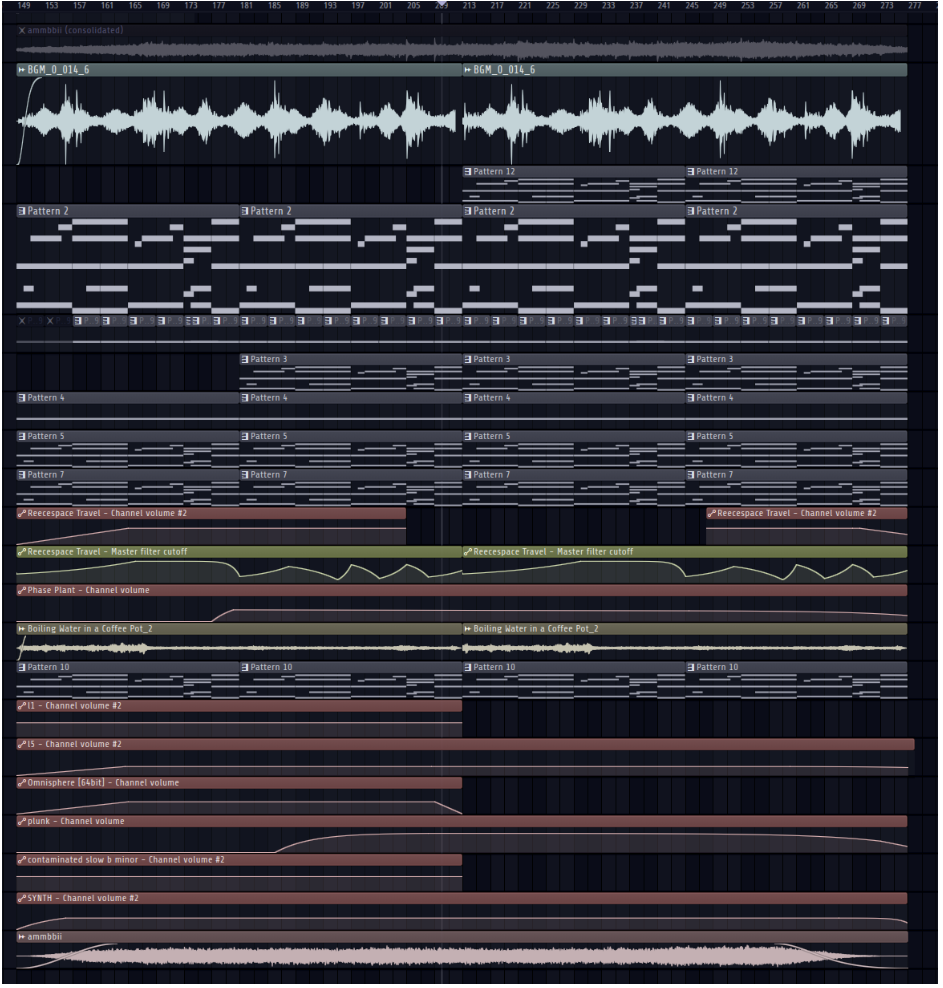
Atmospheric and Musical layers inside the Town
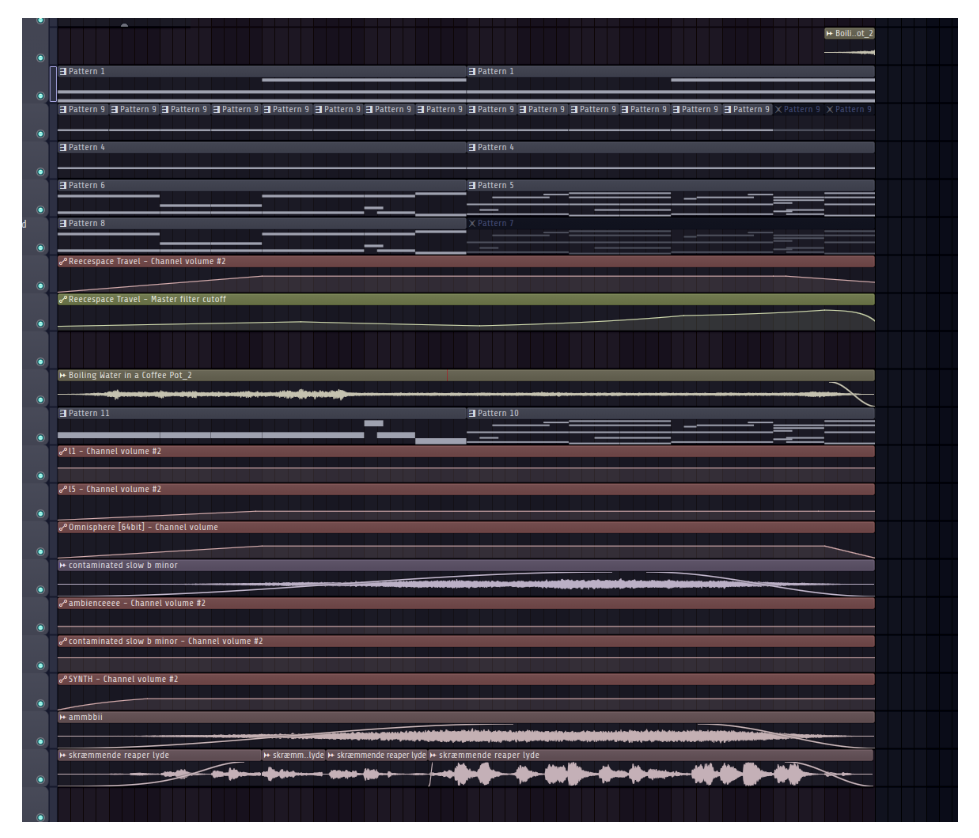
Atmospheric and Musical layers in the desert
In moments of intense combat against zombies, the game seamlessly transitioned into combat music to elevate players’ adrenaline levels. The combat music was carefully designed to immerse players in the action. It featured a combination of manipulated deep and wet drums, simulating a heart pumping feel, enriched with convolution effects to create a tense atmosphere.
To ensure a seamless experience, I employed stingers to mark the beginning and end of the combat state. These stingers facilitated smooth transitions, allowing players to fully engage in the action without disruptions.
Maintaining the intensity of the combat music was crucial. To achieve this, I used compression triggers within FMOD’s mixer. These triggers ensured that the combat music remained prominent and powerful whenever the player was engaged in combat, intensifying the overall gaming experience.
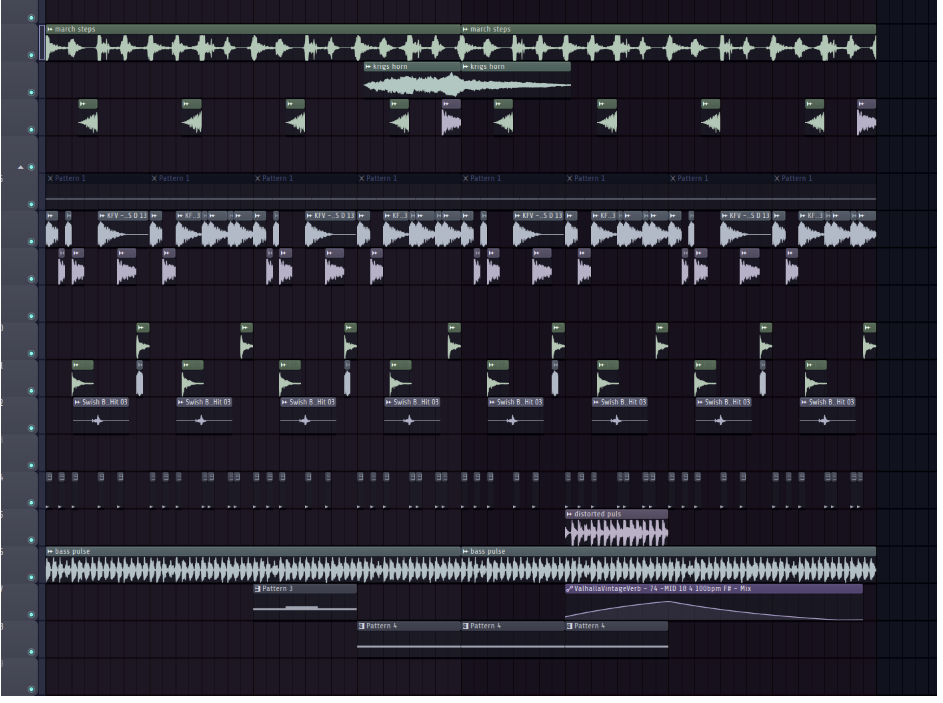
Combat MusiC